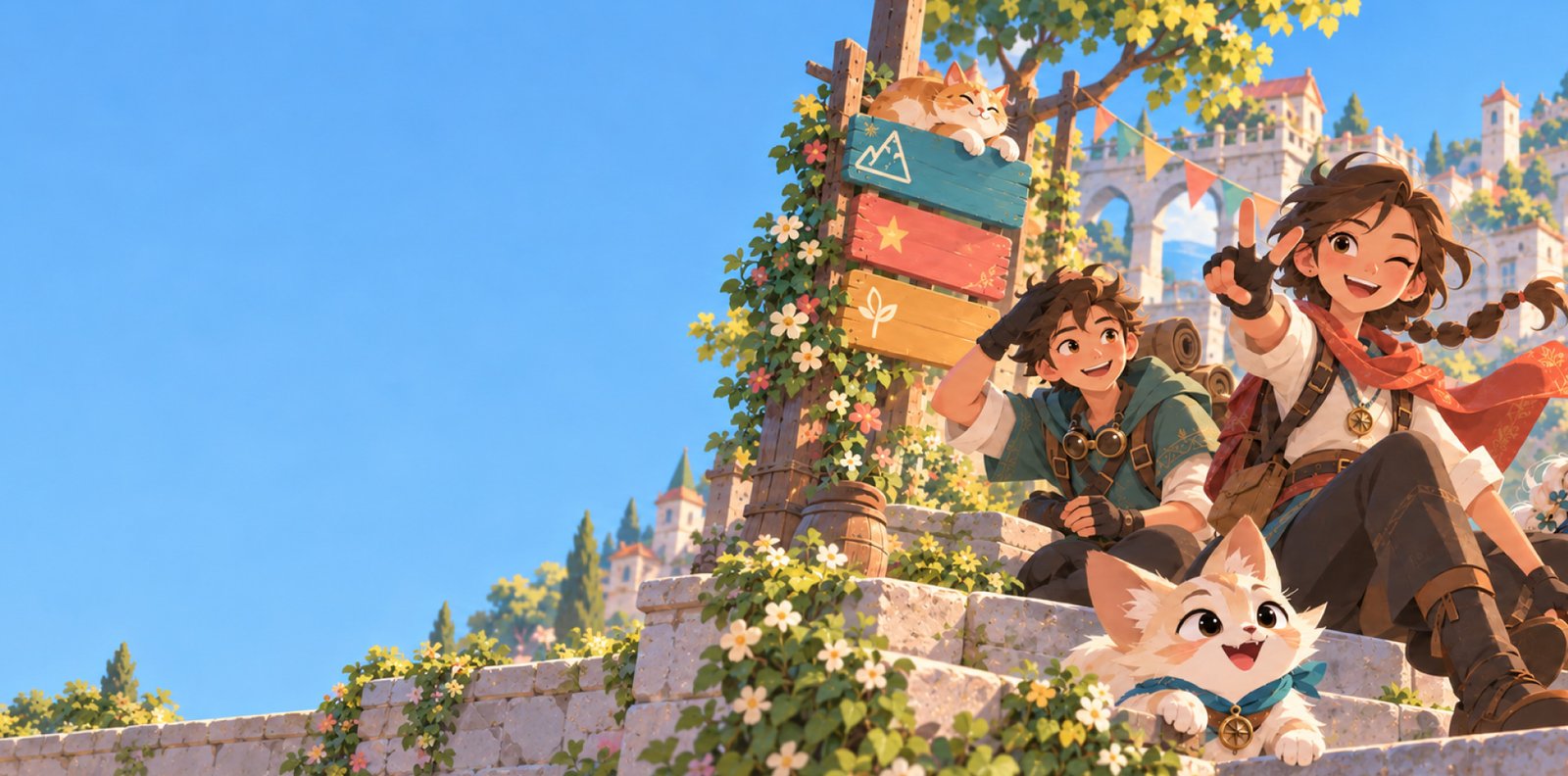
This category recognizes illustration that combines originality, personality, visual storytelling, artistic execution, and audience connection across character-led and IP-driven creative work.
Original Characters
Distinctive character creations developed through original visual concepts, personalities, identities, and artistic approaches.

Character Worlds & Original IP
Illustrated characters developed as part of broader fictional worlds, narratives, properties, universes, or original intellectual property.

Mascots & Brand Characters
Characters created to represent brands, organizations, events, destinations, campaigns, communities, or public initiatives.

Entertainment & Media Characters
Illustration developed for entertainment properties, publishing, games, digital content, media, and audience-facing experiences.
Collectibles & Character Products
Character illustration created for toys, collectibles, merchandise, lifestyle products, limited editions, and related applications.

Independent & Emerging IP
Self-initiated characters, creator-owned properties, developing IP, personal projects, and independently built character worlds.
The MUSE Character & IP Illustration Awards welcomes eligible entrants worldwide, including:
CHARACTER CREATORS & ARTISTS
Character Illustrators
Character Creators
Digital Artists
Independent Creators
IP Creators
CHARACTER &
MEDIA SPECIALISTS
Character Designers
Mascot Creators
Entertainment Illustrators
Comic and Publishing Artists
Game Artists
PRODUCT &
STUDIO CREATIVES
Toy and Collectible Creators
Licensing Creatives
Design Studios
Creative Agencies
Entertainment Studios
BRANDS &
EMERGING TEAMS
Brand Teams
In-House Creative Teams
Students and Emerging Illustrators
Other Eligible Creative Practitioners
Entries may be submitted through the Professional or Emerging division according to the official eligibility requirements.
view entry divisionFind the Right Place for Your Work.
Select the subcategory that best reflects the character type, property, application, audience, purpose, or creative context of the submitted illustration.
Animal Character Illustration
Brand Character Illustration
Character Concept Illustration
Children’s Character Illustration
Comic Character Illustration
Creature Illustration
Fantasy Character Illustration
Game Character Illustration
Mascot Illustration
Original Character Illustration
Sci-Fi Character Illustration
Toy & Collectible Character Illustration
Character World-Building Illustration
Other Character Illustration
Eligible submissions may include:
01
Original Characters & Worlds
Original Character Illustration, Character IP, Character Worlds, Creator-Owned IP, Independent Character Projects, Character Series, Character Families.
02
Mascots & Community
Mascot Illustration, Brand Characters, Corporate Characters, Educational Characters, Social and Community Characters.
03
Entertainment & Publishing
04
Products & Licensing
Toy and Collectible Characters, Merchandise Characters, Licensed Character Illustration.
05
Commissioned & Other Work
Commissioned Work, Self-Initiated Projects, Other Eligible Character & IP Illustration.
submission format

Standalone Character
A single eligible character illustration may be entered as one submission.

Character Family, World, or IP Series
A connected body of work may be submitted as one entry where the illustrations share a clear character family, property, narrative, world, visual language, audience, concept, or creative relationship.
Each entry may include 1 primary image and up to 7 supporting images, for a maximum of 8 images. Supporting materials may include character views, expressions, poses, relationships, world-building imagery, applications, merchandise contexts, or other relevant visuals where permitted under the official entry requirements.
Entries are evaluated through the official MUSE judging framework, with consideration given to the work’s originality, character development, visual storytelling, artistic quality, audience connection, and creative or IP context.
01
The distinctiveness of the character concept, artistic approach, visual identity, personality, and creative interpretation.
02
How effectively the illustration communicates character, personality, emotion, role, relationships, narrative, or a broader creative world.
03
The quality, control, refinement, consistency, and effectiveness of the chosen style, medium, technique, form, expression, and final presentation.
04
How successfully the character creates recognition, emotional connection, memorability, and meaningful engagement with its intended audience.
05
How effectively the work responds to its intended purpose, audience, platform, property, application, world, and broader creative context.

Present your work through an international awards platform dedicated to illustration excellence.

Add independent recognition to your portfolio, character property, original IP, professional profile, studio, or creative practice.

Have eligible work considered through the official MUSE evaluation framework by experienced creative professionals.

Eligible entries may compete for Platinum, Gold, and Silver recognition, Category Winner of the Year, and the competition’s highest individual distinctions.
What is the MUSE Character & IP Illustration Awards?
The MUSE Character & IP Illustration Awards is an international competition category recognizing outstanding character illustration, original intellectual property, mascots, branded characters, entertainment characters, collectible characters, and character-led creative worlds.
Who can enter the MUSE Character & IP Illustration Awards?
Eligible character illustrators, independent creators, IP creators, freelance artists, studios, agencies, entertainment teams, brand teams, students, emerging illustrators, and other qualifying entrants worldwide may participate through the appropriate Professional or Emerging division.
What types of character and IP illustration are eligible?
Eligible work may include original characters, character worlds, mascots, branded characters, entertainment properties, publishing characters, game characters, collectible characters, creator-owned IP, character families, and other qualifying character-led illustration.
Does a character need to be part of an established IP?
No. Eligible work may include newly created characters, developing properties, independent projects, creator-owned IP, personal concepts, and established character properties.
Can a single original character be entered?
Yes. A standalone eligible character illustration may be submitted as one entry.
Can I submit a character family or connected world?
Yes. A cohesive body of work may be submitted as one entry where the illustrations share a clear character family, property, narrative, world, visual language, audience, concept, or creative relationship.
Can mascots or branded characters be entered?
Yes. Eligible characters created for brands, organizations, events, destinations, campaigns, institutions, communities, and public initiatives may be submitted.
Can characters created for toys or collectibles be entered?
Yes. Eligible character illustration created for toys, art collectibles, figurines, merchandise, lifestyle products, limited editions, and related applications may be submitted.
Can game or entertainment characters be entered?
Yes. Eligible characters created for games, entertainment properties, digital content, publishing, media, and related audience experiences may be submitted.
How is this category different from Entertainment Illustration?
Character & IP Illustration focuses on the development, identity, personality, visual language, and audience connection of characters or character-led properties. Entertainment Illustration focuses more broadly on illustration created for entertainment productions, releases, performances, campaigns, and audience experiences.
How is this category different from Children’s Illustration?
Character & IP Illustration focuses on the character or property itself, including its identity, personality, recognizability, and broader world. Children’s Illustration focuses on illustration created specifically for young audiences, age-related communication, storytelling, learning, or childhood experiences.
Does the IP need to be commercially launched?
No. Eligible unpublished, developing, conceptual, independent, and creator-owned character IP may be submitted where it meets the official competition requirements.
Can character sheets or development work be entered?
Yes. Eligible character development materials may be included where they form part of a considered illustration project or help communicate the character’s identity, personality, expressions, relationships, or world.
Can licensed character work be entered?
Yes, where the entrant has the necessary rights, authorization, or permission to submit the work. Entrants remain responsible for all applicable rights and permissions.
Can the same work be entered into multiple categories?
Yes. A work or cohesive project may be entered into multiple relevant categories. Each category submission is treated as a separate entry and requires the applicable entry fee or one eligible entry credit.
Are international entrants eligible?
Yes. The MUSE Illustration Awards welcomes eligible entries from around the world.
Can AI-generated or AI-assisted work be entered?
The MUSE Illustration Awards recognizes illustration in which the entrant demonstrates meaningful creative authorship and artistic contribution. AI-assisted tools may be used where permitted, but entrants must disclose any material use of generative AI during the submission process.
Fully AI-generated work created primarily through prompting, without substantial human artistic development or transformation, is not eligible within the main illustration categories.
Entrants remain responsible for the originality, authorship, rights, permissions, and accuracy of all information associated with submitted work.
How is character and IP illustration judged?
Entries are evaluated across Creativity & Originality, Concept & Visual Storytelling, Artistic Craft & Execution, Communication & Impact, and Context & Relevance, with consideration given to the work’s character development, artistic quality, audience connection, purpose, application, and creative or IP context.
2027 CALL FOR ENTRIES
Great character illustration can build personality, inspire connection, grow into a world, and become part of how audiences remember a story, brand, or original idea.
Present your work on an international stage and compete for recognition through the MUSE Illustration Awards.
Your Vision. Your Voice. Your MUSE.